

09 30 3 Key Insights for Cable Harness Cutting Processes
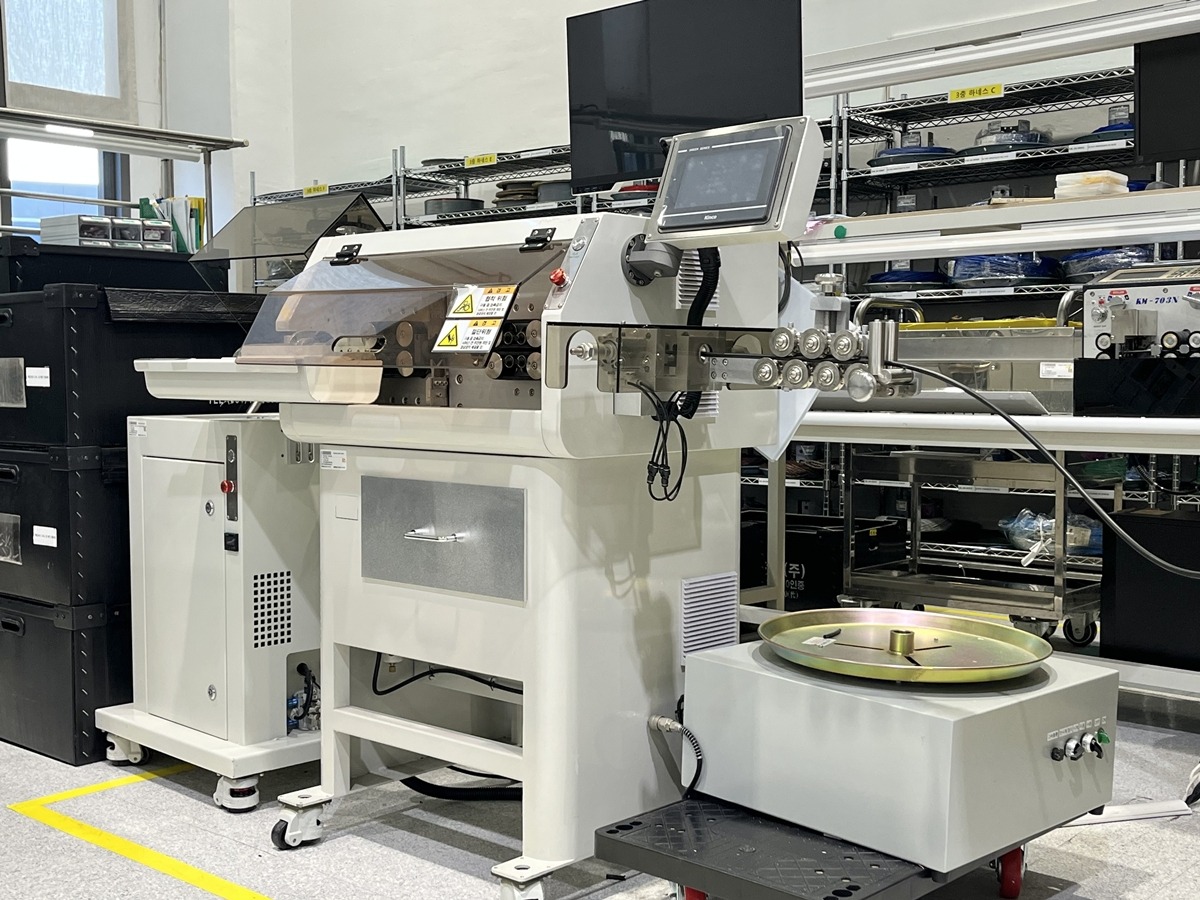
「3 Key Insights for Cable Harness Cutting Processes」
🗝️ Tips for Improving Dimensional Tolerance and Cut Surface Quality
One of the most common challenges in cable harness processing plants is “cut length error” and “defective cut surfaces.” Even a dimensional deviation of just a few millimeters can lead to critical defects during subsequent crimping or housing assembly processes. Today, we share three key insights to dramatically improve cutting precision when operating cable harness cutting equipment.
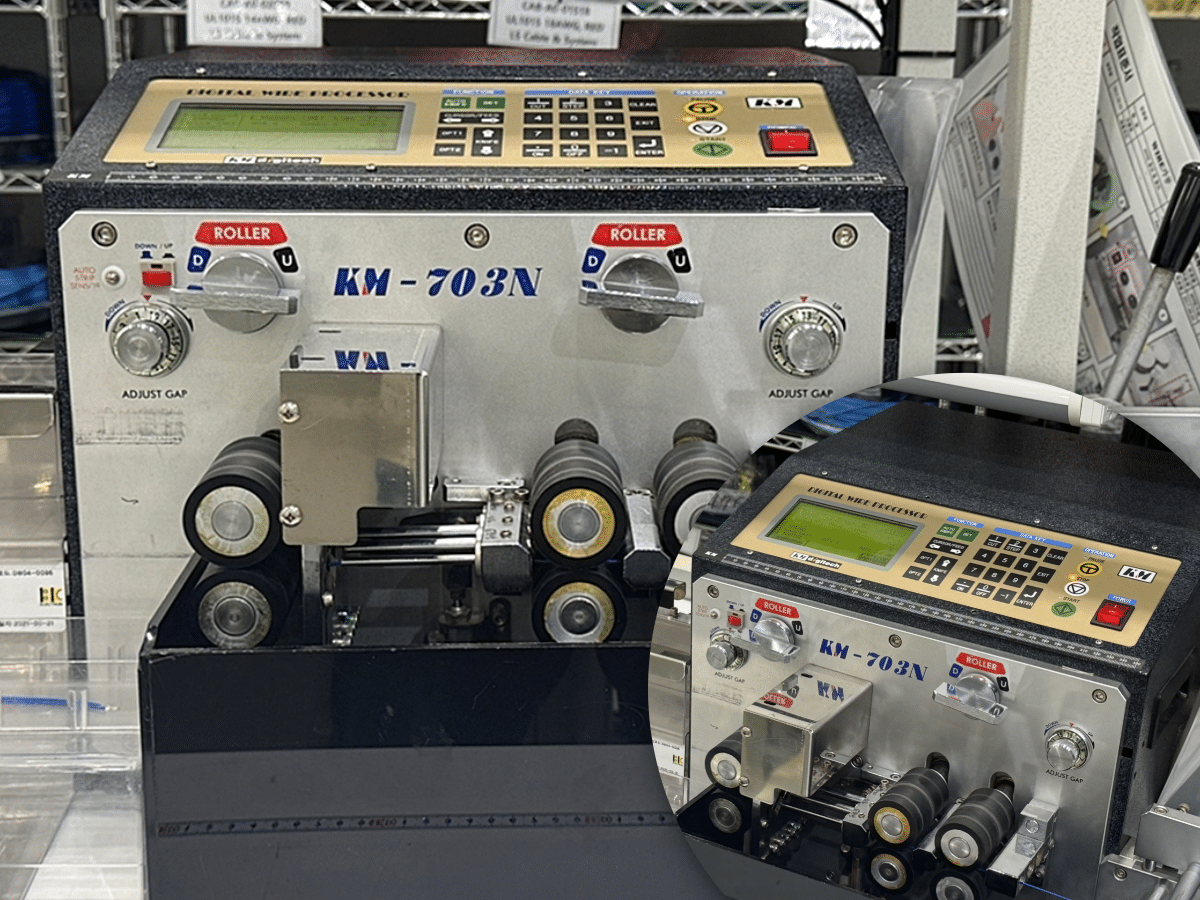
🟪 Feed Control and Maintaining Tension-Free Cable Delivery
The primary cause of cutting length errors is variation in cable tension and slip on the feeding rollers. As the cable unwinds from the spool, drape sensors or dancer rollers should be positioned to create appropriate slack, ensuring the cable enters the cutting machine in a tension-free state. Additionally, encoder sensors must be integrated with the belt and roller feed mechanisms to compensate for real-time feeding distance in live time.
🟪 Selecting and Maintaining Cable-Specific Blades
Even with high-end equipment, improper blade condition or geometry will crush the cut surface and cause irregular lengths. Blades made of cemented carbide ensure durability. While a standard V-blade is sufficient for single-core wires, multi-core cables or materials prone to outer diameter deformation require a Radius blade customized to the cable’s round contour to prevent cross-sectional distortion. Furthermore, accumulated PVC dust and debris on blade surfaces easily leads to cumulative dimensional errors, so using air blows or periodic solvent cleaning to remove residues is essential.


🟪 Controlling Cable Curvature and Environmental Variables
The condition of the cable harness raw material itself and the workplace environment directly impact cutting precision. To eliminate twist and curvature from cables stored on spools, horizontal and vertical straightening rollers must be placed immediately before the cable enters the cutter. Furthermore, jacketing materials such as PVC and Teflon expand or contract easily depending on ambient temperature. It is essential to maintain a constant workshop temperature of 20–25°C or set feeding compensation values according to seasonal ambient changes.
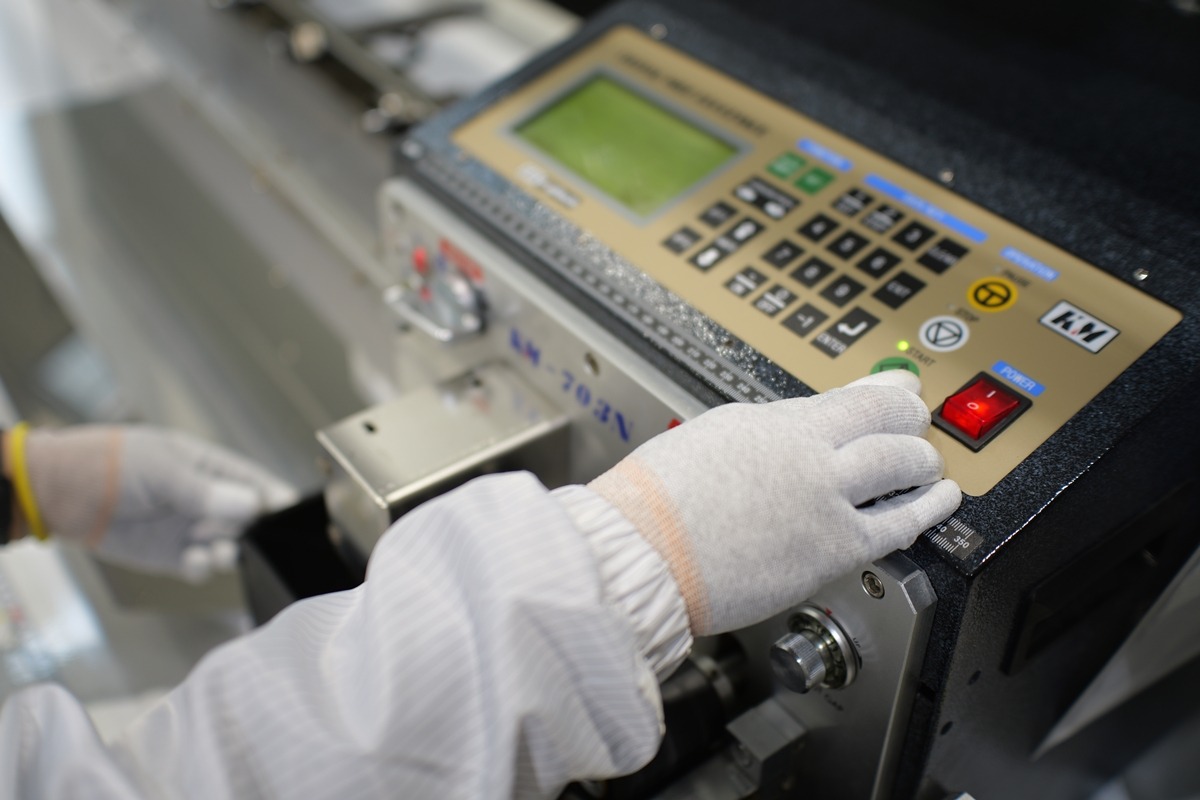
💡Beyond Cable Harness Cutting Precision
Advancing the precision cutting process does more than simply reduce errors during the cutting stage itself.
– Prevents Downstream Defects: It fundamentally prevents stray strands and core wire damage during subsequent stripping and terminal crimping processes.
– Ensures Smooth Assembly: Precise dimensional control eliminates cable harness twisting or interference caused by uneven wire lengths during housing assembly.
– Maximizes Yield: It dramatically reduces material waste and rework costs, significantly improving overall production yield.
Achieving millimeter and micrometer-level ultra-precision in the cable harness cutting process is not a simple problem solved merely by purchasing high-end equipment. It is a comprehensive process realized only when every factor across the entire line works in harmony—starting from tension control the moment raw cable unwinds from the bobbin, to slip-free precision feeding driven by servos and incremental encoders, and to selecting cemented carbide blades optimized for specific jacketing and core materials along with periodic wear management.
Only when these three key insights harmonize seamlessly—both physically and systematically—as a unified process can you consistently produce cable harnesses of exceptional quality and reliability.