

04 27 Cable Harness Manufacturing Process

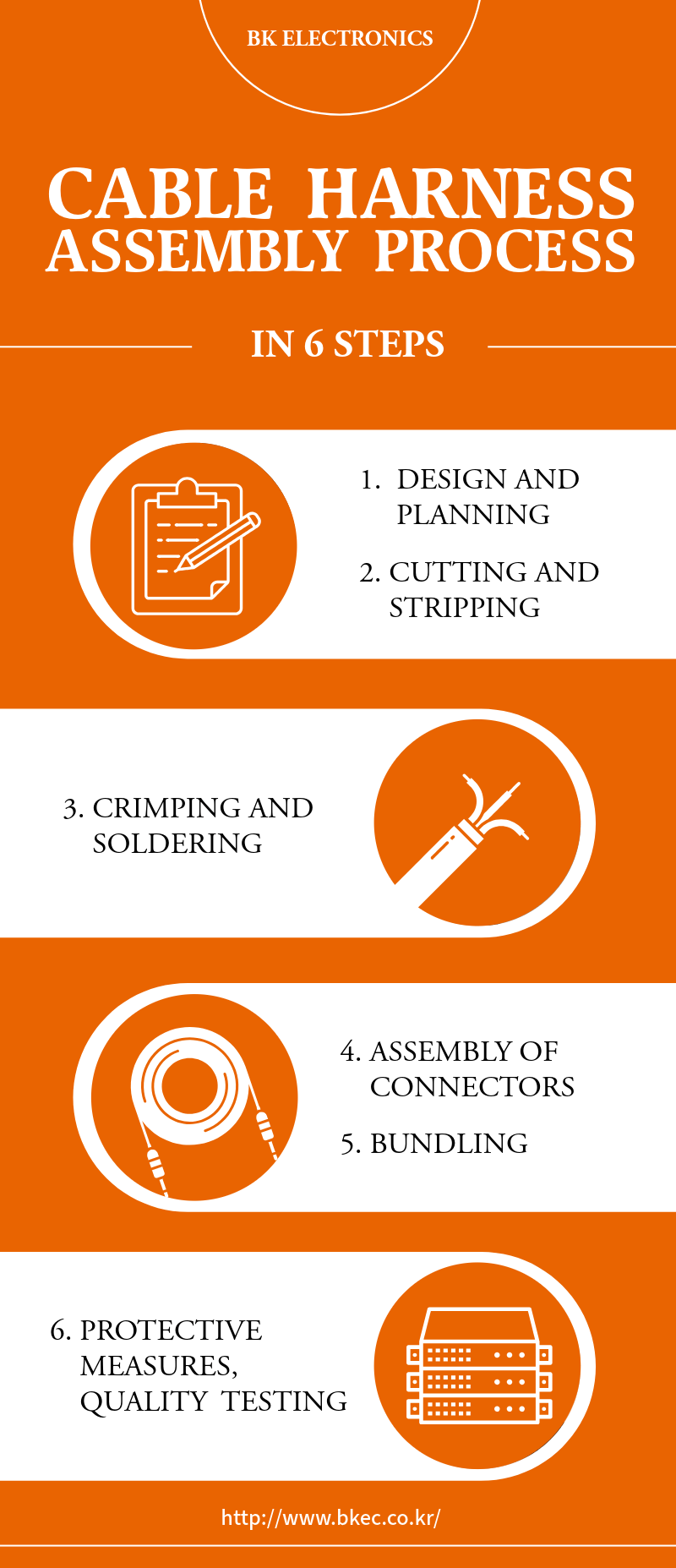
│ Cable Harness Manufacturing Process and Key Characteristics
Let’s take a look at the characteristics of the cable harness (wire harness) process, along with images of the equipment commonly used.
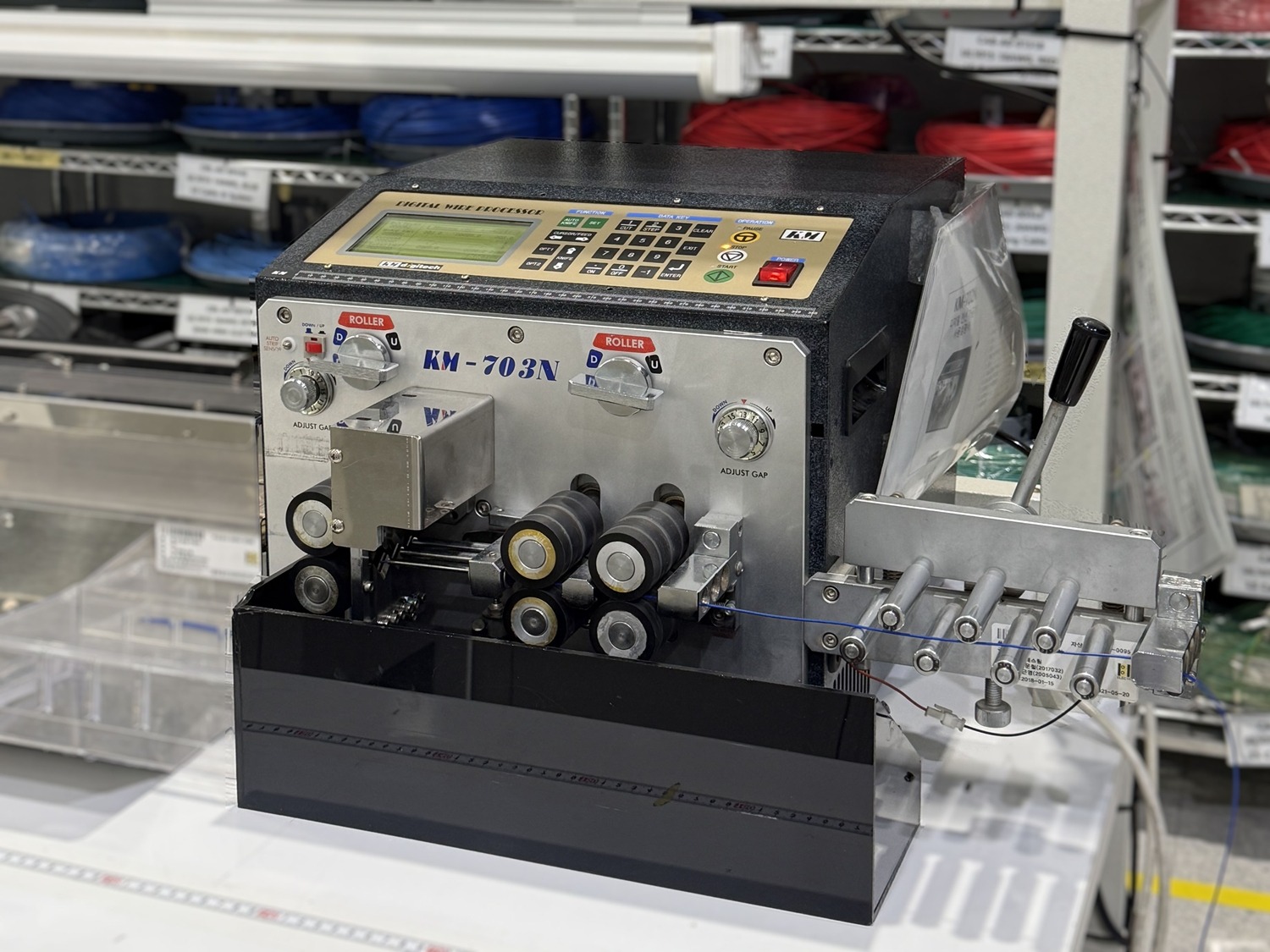
1) Wire Cutting & Stripping Machine
This equipment precisely cuts wires to specific lengths and strips the insulation jacket based on pre-programmed settings. It performs cutting and stripping to designated measurements, offering high speed and exceptional accuracy that significantly reduces operational errors compared to manual labor (operating at over 10 times the speed of manual work). As the very first step in cable harness production, this process prepares wires with precise dimensions.
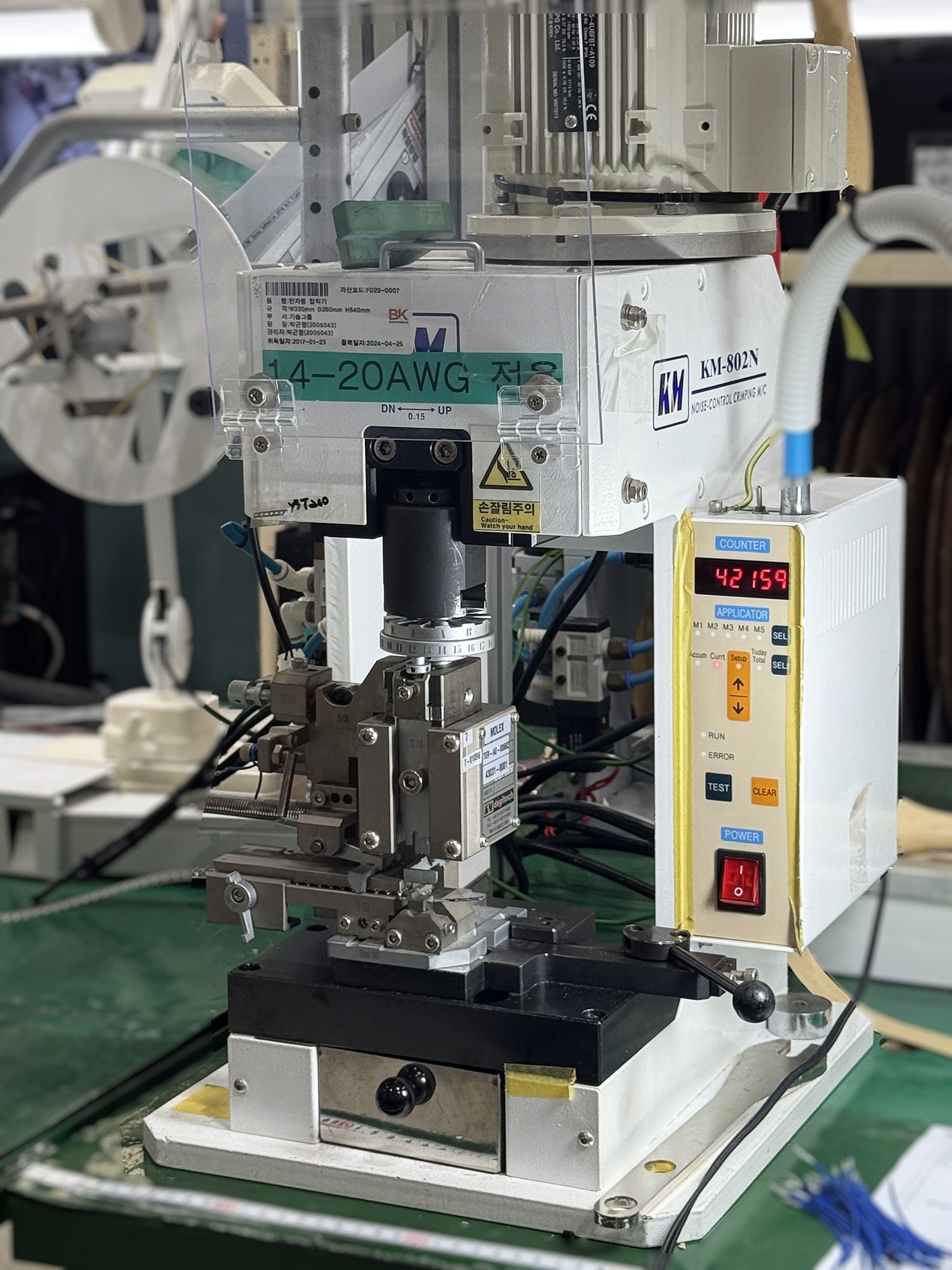
2) Crimping Machine
This equipment is used to crimp terminals onto the ends of wires. Utilizing specialized dies, it securely fastens terminals to the wires, ensuring both electrical and mechanical connection quality through this crimping process. Fine-tuning adjustments help prevent connection defects, typically applying over 2 tons of pressure to integrate the wire and terminal into a single unit. Depending on production volume, operators can choose between automatic and semi-automatic types. This process is crucial for connector assembly, where electrical reliability is paramount.
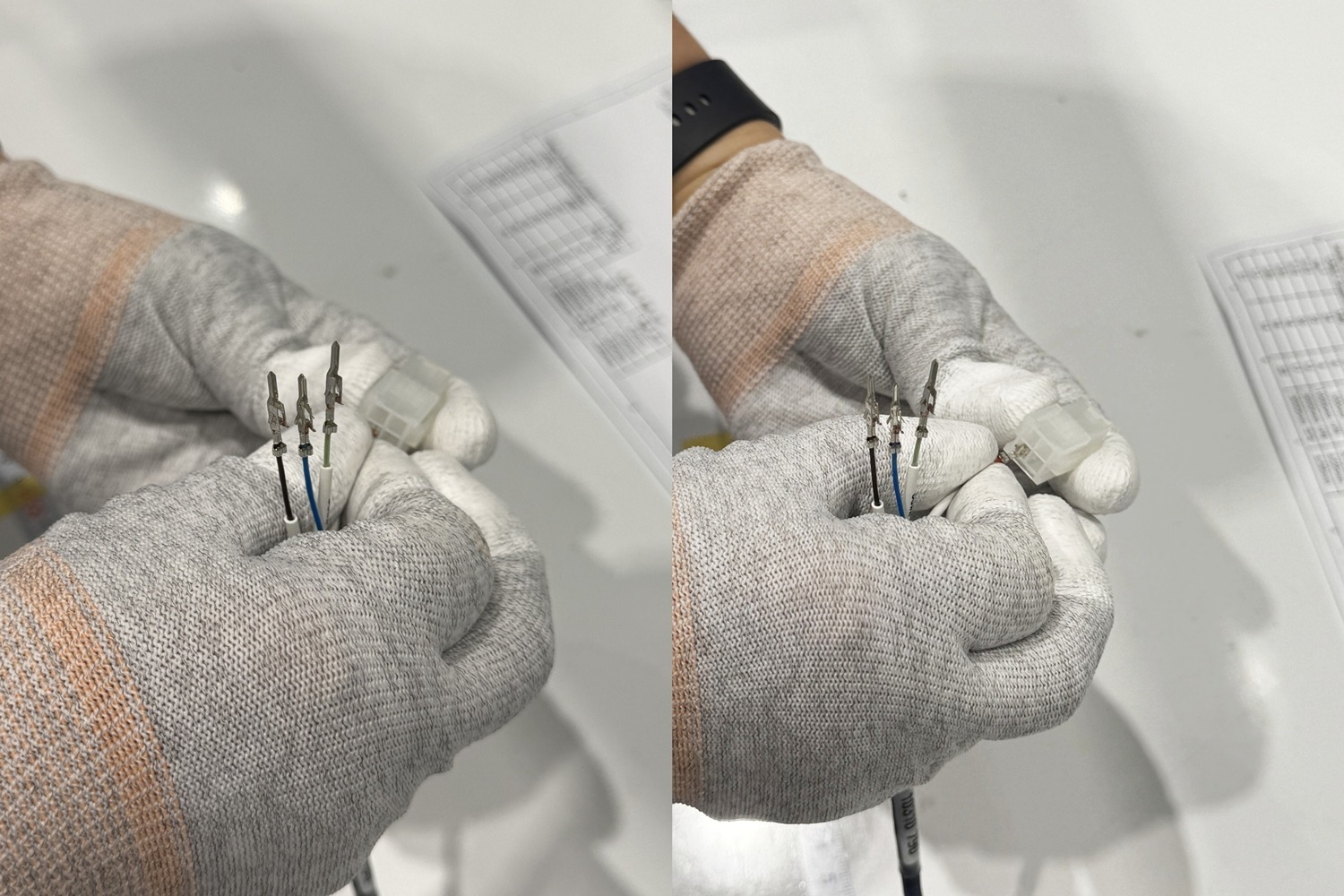
3) Assembly Workbench/Pin Board
This is the cable harness assembly stage. No specialized equipment is required, and the process is relatively straightforward as pin positions are clearly marked based on the CAD design drawings. This is a core process where a variety of wires and components are assembled into their exact locations.
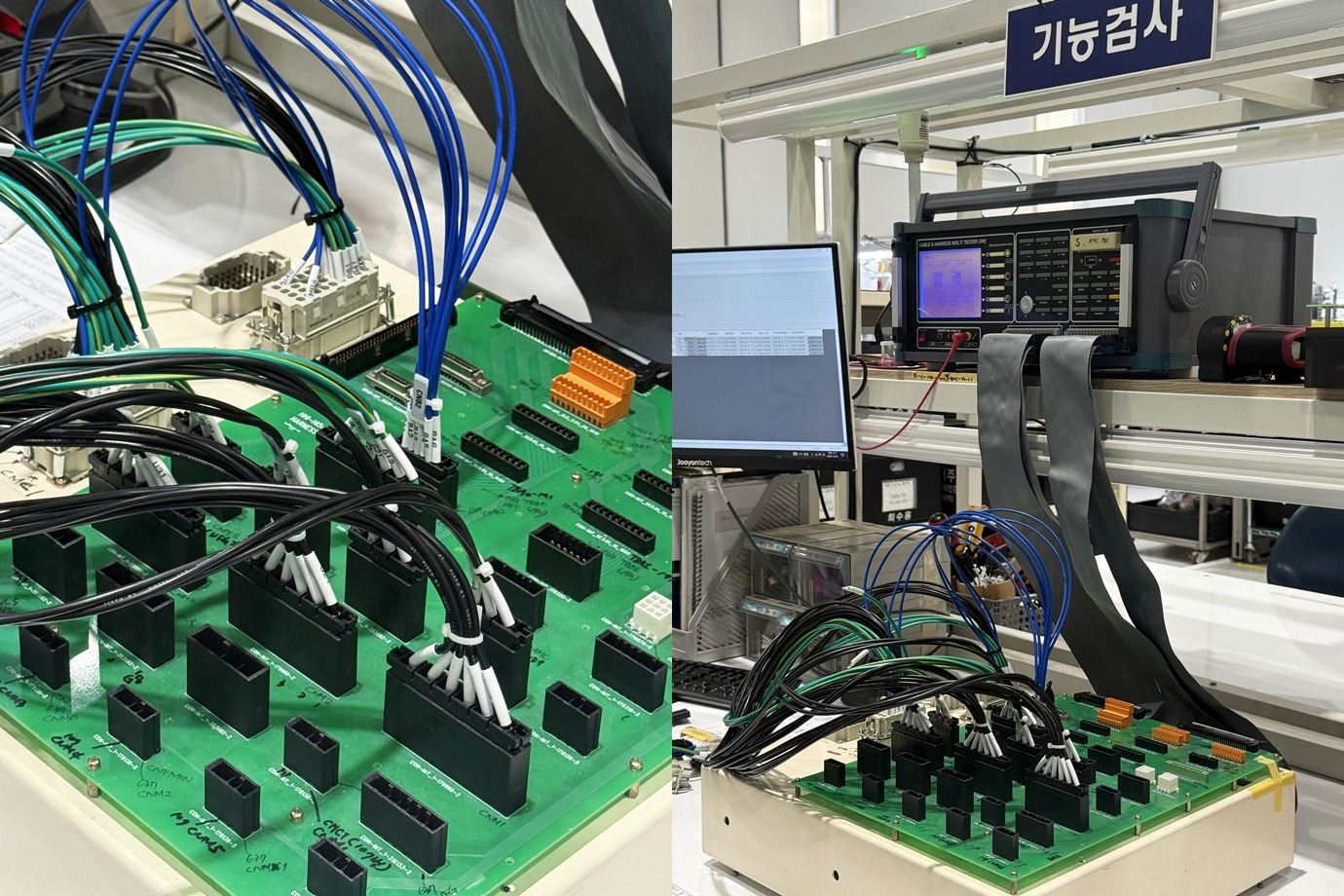
4) Testing & Inspection Equipment
This equipment is designed to inspect the electrical quality and connection status of assembled wire harnesses. It performs electrical tests, including continuity and insulation resistance testing, to quickly detect errors, shorts, or open circuits. Capable of inspecting from dozens to thousands of pins simultaneously, it stores the inspection results as logs for quality history tracking. This testing equipment serves as an essential tool and process in the quality assurance (QA) stage to identify product defects.
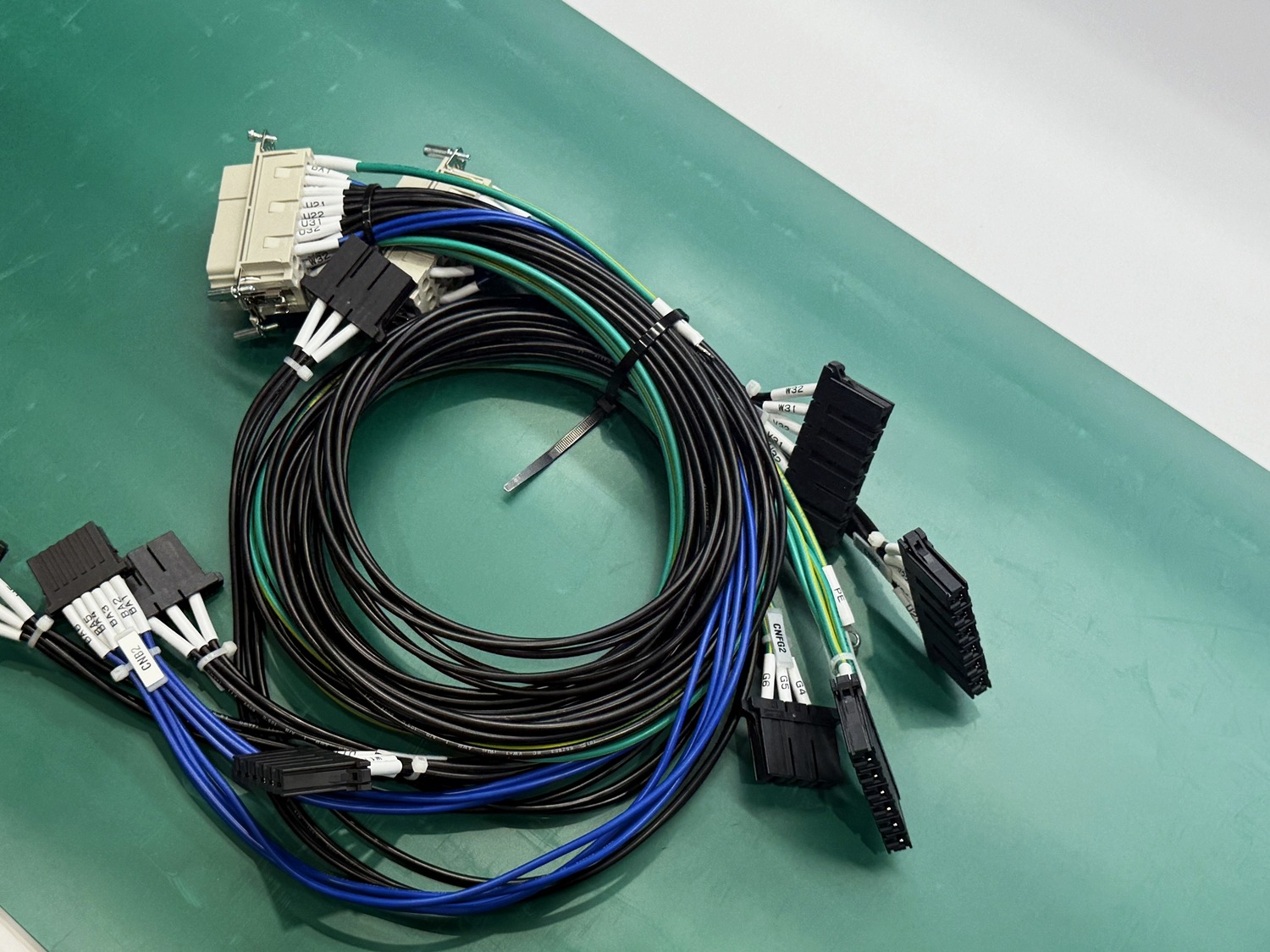
While the performance of various manufacturing equipment is undoubtedly critical, directly impacting productivity and quality, BK Electronics’ long-standing experience on the shop floor reveals an undeniable truth: true competitiveness begins in the design phase, rather than with the machinery itself.
A cable harness is far more than just a component connecting wires. It is a comprehensive system that must simultaneously account for limited spaces, complex routing paths, electrical reliability, durability, ease of assembly, and even cost-efficiency. The solutions that satisfy all these requirements are largely determined before the first drawing is made or during the very early stages of design. Ultimately, the success of a project hinges on how deeply we understand the requirements and whether we can deliver innovative “counter-proposals” to our clients based on fresh ideas.
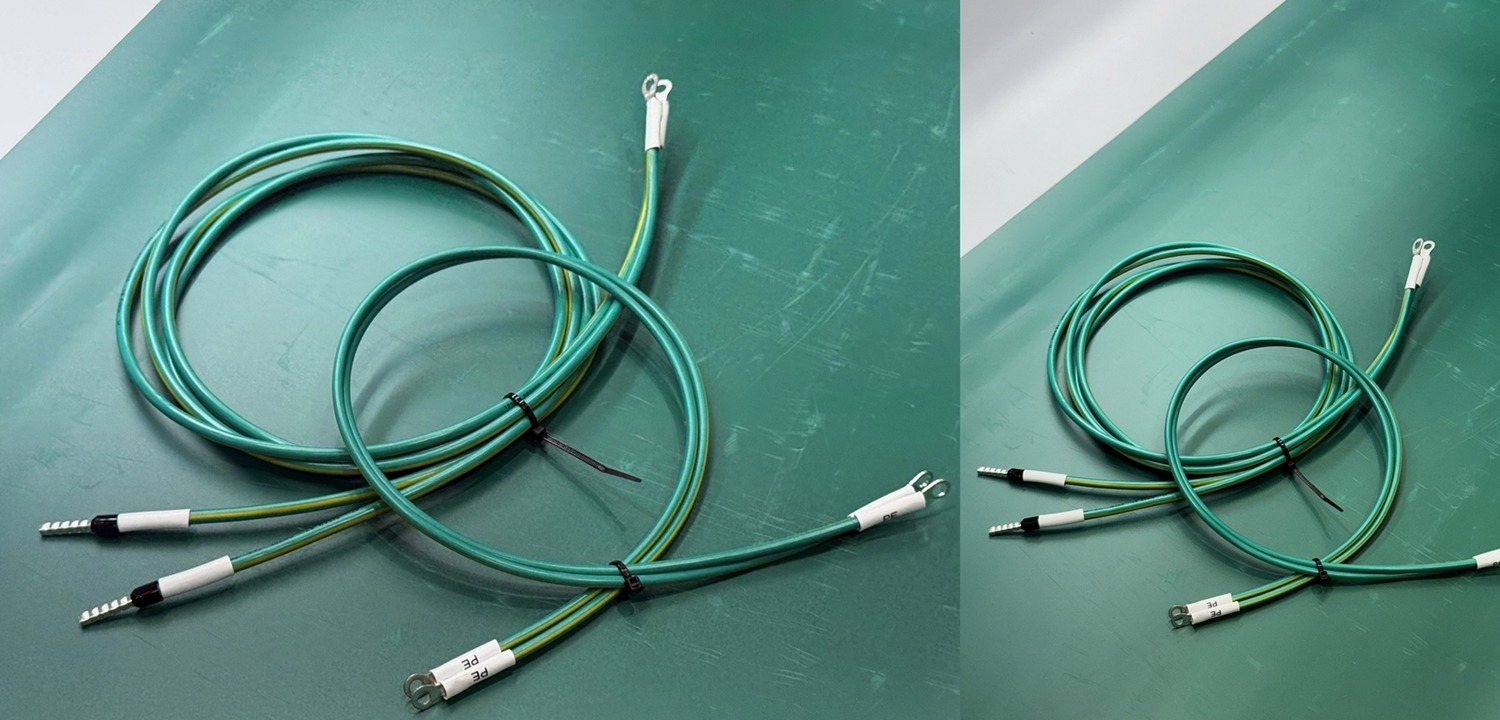
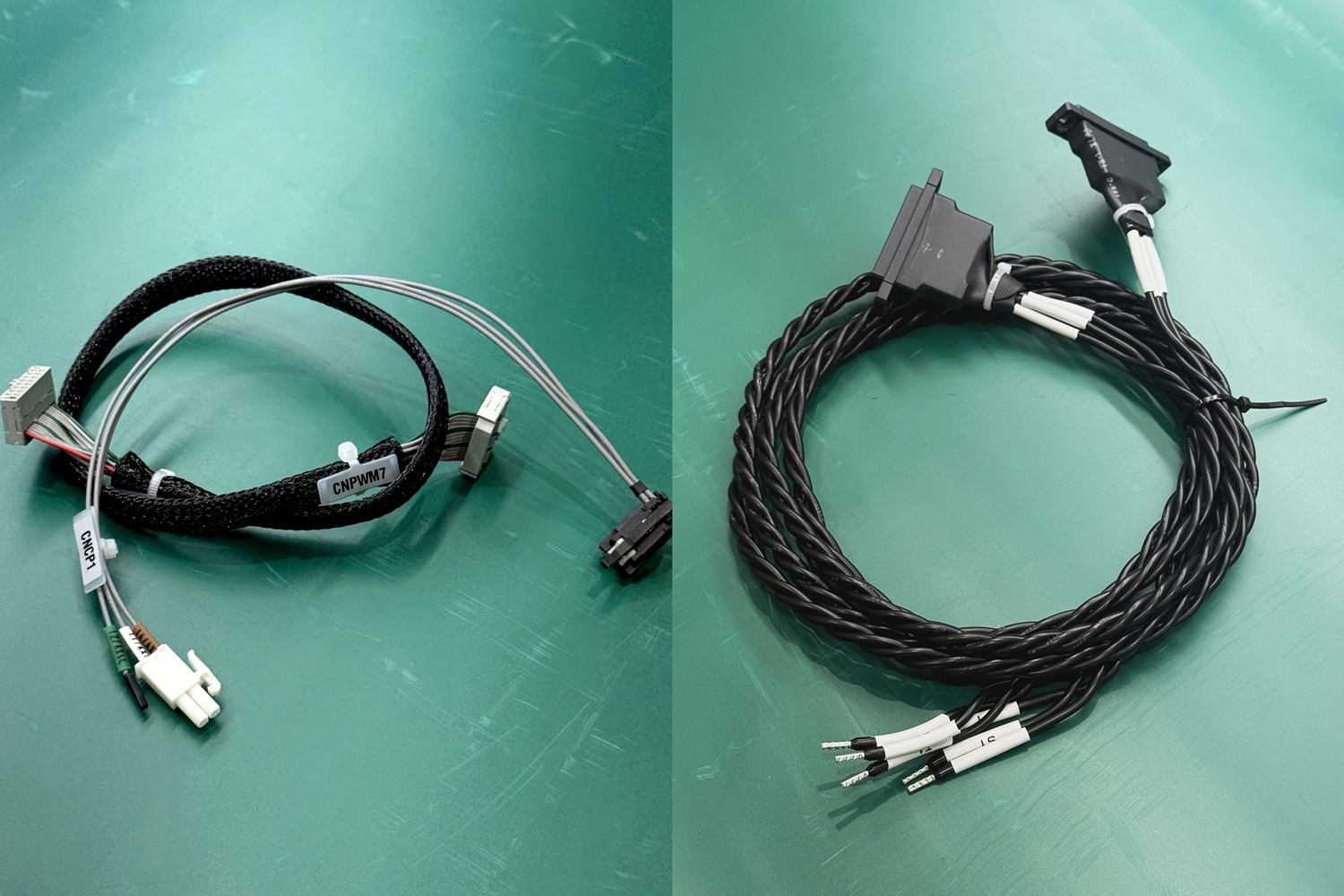
BK Harness’s nearly 40 years of experience in the cable harness industry goes far beyond mere technical proficiency. Having handled countless cases—ranging from industrial equipment and electronic devices to cable harnesses engineered for extreme environments—we have learned that there is never just one approach to a single set of requirements.
Simply changing a wire specification can streamline the entire assembly process, and slightly adjusting a connector’s position can drastically reduce both defect rates and production time. These strategic decisions are only possible when backed by a deep accumulation of trial, error, and continuous improvement.
If you are looking for a true partner in the cable harness sector, please contact BK Electronics. Equipment can always be matched for speed, but insight in design is a competitive advantage that only comes from experience.