

05 21 Optimization of Wiring Harness BOM Structure

“Optimization of Wiring Harness BOM Structure”
Wiring harnesses serve as the nervous system for products in modern industries, particularly in the automotive and home appliance sectors. However, due to the complexity of being intertwined with thousands of wires, connectors, and terminals, this component accounts for a very high proportion of costs and remains a challenging area to manage.
Cost reduction for wiring harnesses is not simply about finding cheaper materials. Instead, the core lies in how strategically you optimize the BOM (Bill of Materials) structure, which serves as the most critical blueprint of the product. Let’s explore the key strategies to achieve this.
📌 Strategies for Optimizing Wiring Harness BOM Structure to Reduce Costs:
-
Standardization and Commonization: Preventing BOM Fragmentation
-
Modular Design: Building a Structure That Defeats Complexity
-
Specification Optimization through VA/VE (Value Analysis / Value Engineering)
-
Digital Twin and BOM Alignment (Consistency)
-
Restructuring the BOM in Alignment with the Supply Chain
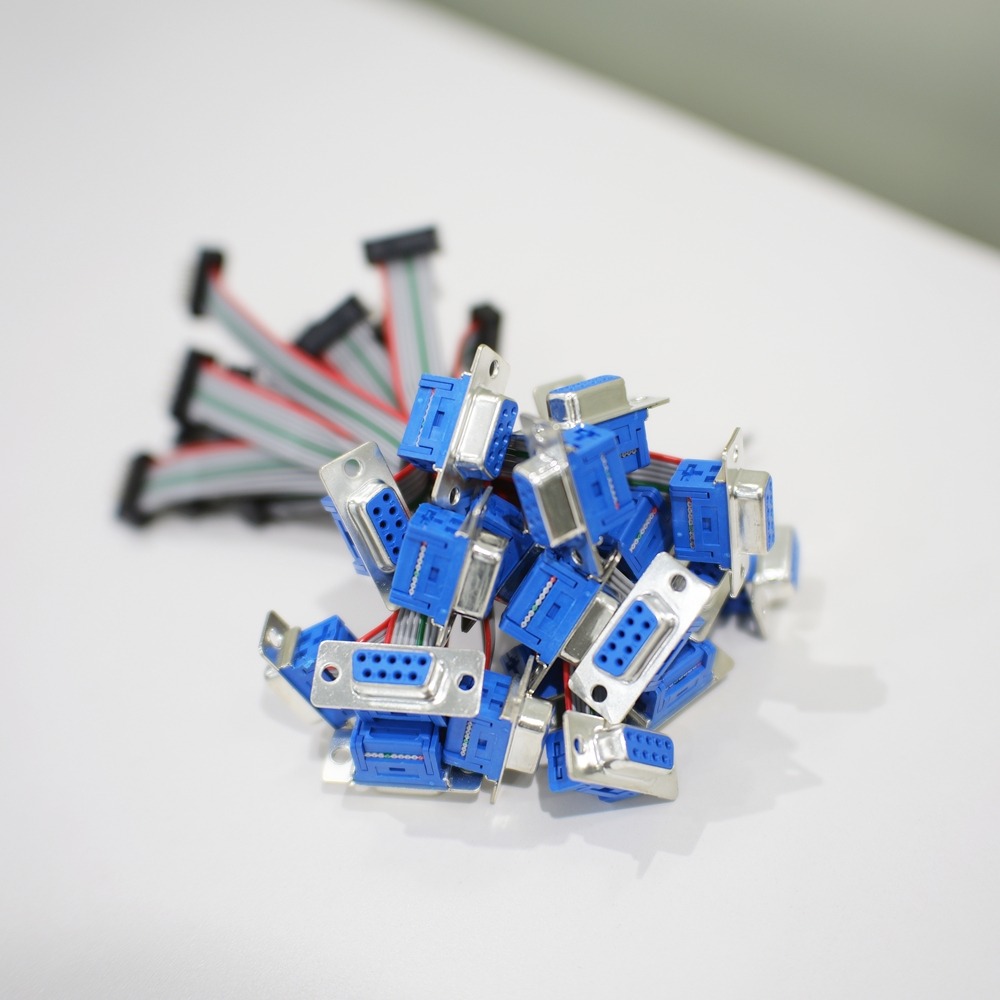
🟨 Standardization and Commonization to Prevent BOM Fragmentation
The very first strategy that must take precedence is component standardization. A single finished product or complex machinery contains numerous wiring harnesses. If different connectors, terminals, and wires are used for each one, the number of BOM line items increases exponentially. This inevitably leads to weakened purchasing leverage and skyrocketing management costs.
To prevent this cost escalation, integrating connectors that perform similar functions allows for consolidated purchasing volumes, which drastically drives down the unit cost. Furthermore, standardizing wire colors, gauges, and insulation materials to a minimal set of specifications reduces changeover frequency on the production line, thereby maximizing process efficiency.
→ Connector and Terminal Integration + Simplification of Wire Specifications

Since “I” represents current here, even a slight increase in current causes the generated heat to escalate sharply in proportional to its square. To resolve this issue, modern harness design must focus on balancing lightweighting with heat dissipation performance—not simply by increasing wire thickness, but by utilizing high-heat-resistant insulation materials or introducing aluminum conductors.
🟨 Modularization
In the past, it was common practice to design a single, massive wiring harness as one whole piece. However, this created a management nightmare, forcing the creation of a separate BOM for even the slightest variation in options. The solution to this issue is BOM Modularization.
-
Restructure by separating the harness into functional units—such as the engine room, dashboard, and doors—and connecting them through standard interfaces.
-
Adopt a method that couples a base-model harness with additional modules based on selected options.
$\rightarrow$ This eliminates the need to maintain hundreds of derivative BOMs, as it allows for flexible configuration using a small combination of standard modules. Consequently, this minimizes costs incurred during engineering changes (design modifications).
🟨 Value Analysis/Value Engineering
The crown jewel of BOM structure optimization is Value Engineering (VE). We must constantly question whether the components currently registered in the BOM actually require that level of performance. This involves reviewing and redesigning to optimal specifications—checking, for instance, whether expensive, high-heat-resistant wires are being used in areas where they aren’t needed, or if the wire gauge is excessively thick relative to its current density. Furthermore, if certain material costs skyrocket unexpectedly, alternative materials must be considered, provided they fall within acceptable electrical tolerance limits.
🟨 Digital Twin and BOM Alignment
There is yet another cost-reduction point that we often overlook: closing the gap between the Engineering BOM (E-BOM) and the Manufacturing BOM (M-BOM). Because 3D routing design is absolutely critical for wiring harnesses, leveraging digital design tools to optimize the actual required wire length down to the millimeter can significantly reduce material waste. Keep in mind that when producing tens of thousands of units, a difference of just a few millimeters can translate into massive cost savings.

🟨 BOM Restructuring Considering the Supply Chain (SCM)
Given the labor-intensive nature of wiring harness assembly, simplifying the BOM structure is highly advantageous to facilitate production in low-cost labor regions. While utilizing global common parts has its benefits, a smarter approach involves multi-registering locally sourcable alternative parts in the BOM. By accounting for logistics costs and customs duties, this strategy allows companies to effectively manage both supply chain risks and expenditures simultaneously.
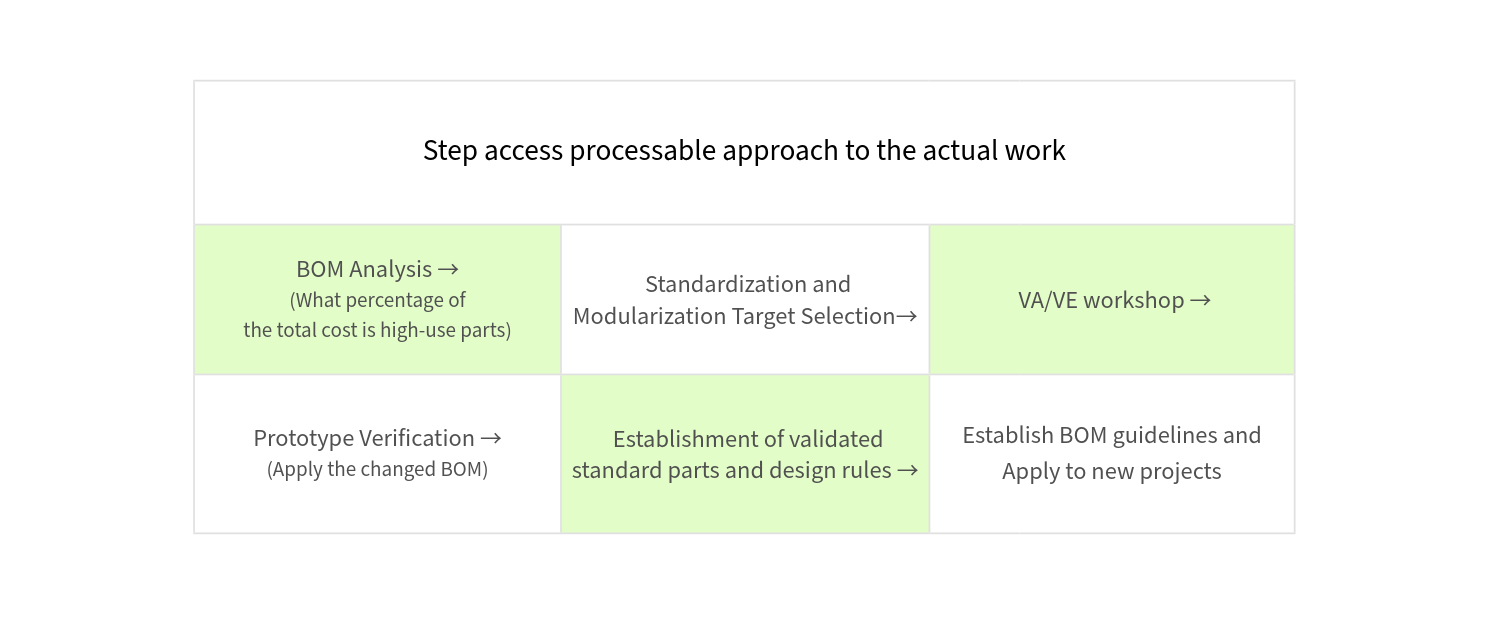

“How effectively we modularize the BOM, standardize components, and eliminate over-specifications…”
[Design All Costs at the Engineering Stage; Structural Cost Reduction is Impossible Without Changing the Structure Itself]
Wiring harness cost reduction is a process of refining the product’s structural complexity down to a manageable level. Powerful cost competitiveness is only achieved when component standardization, modular configuration, and continuous specification verification through Value Engineering (VE) seamlessly work together.